
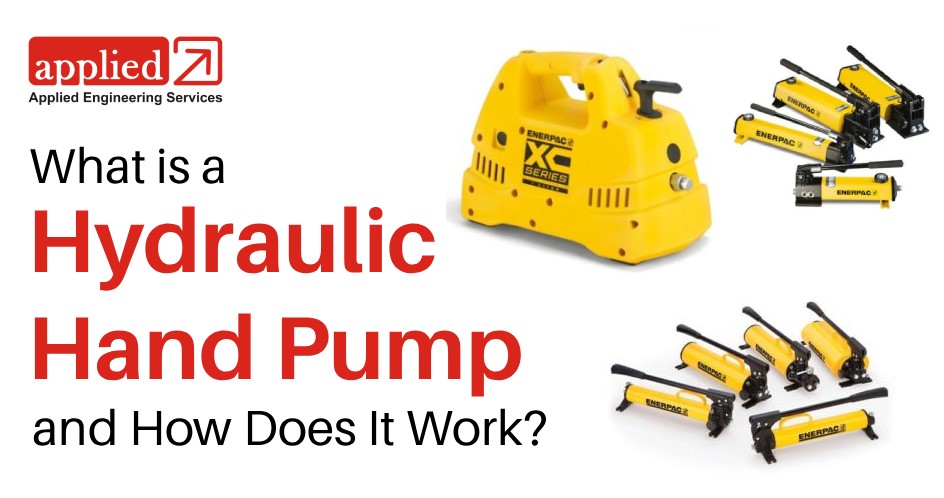
Few pieces of industrial equipment offer as much capability in as compact and self-contained a package as the hydraulic hand pump. Capable of generating pressures up to 700 bar (10,000 psi) with nothing more than human muscle and a lever stroke, the hydraulic hand pump is an indispensable tool across manufacturing, construction, maintenance, and heavy industry. Yet for all their importance, many people encounter these devices without fully understanding how they work or what makes one better suited to a particular job than another.
Whether you are a maintenance engineer selecting a hydraulic pump for a bolt tensioning application, a site supervisor managing a structural steel project, or simply someone curious about the engineering behind industrial hydraulics, this guide will give you a clear, practical understanding of what a hydraulic hand pump is, how it generates and controls hydraulic power, what types are available, and where they are used across modern industry.
What Is a Hydraulic Hand Pump?
A hydraulic hand pump — also called a manual hydraulic pump or hand-operated hydraulic pump — is a portable, self-contained device that uses manual lever or handle movement to generate hydraulic pressure within a closed fluid circuit. The pressurised hydraulic fluid produced by the pump is then directed through hoses to a hydraulic actuator — typically a cylinder or ram — which converts the fluid pressure back into a powerful mechanical force to perform a specific task: pressing, lifting, tensioning, bending, cutting, or crimping.
The fundamental physics at work is Pascal’s Law, one of the cornerstones of fluid mechanics. Pascal’s Law states that pressure applied to a confined, incompressible fluid is transmitted equally in all directions throughout the fluid. In practical terms, this means a small force applied over a small area by the pump piston creates a pressure that — when applied over the much larger area of a cylinder piston — generates a force many times greater than the original input. This force multiplication is what makes hydraulic systems so powerful.
Pascal’s Law in action: A hand pump generating 700 bar pressure connected to a 50 mm bore cylinder produces over 137,000 N (14 tonnes) of force — from nothing more than hand effort on a lever.
A hydraulic hand pump typically consists of a reservoir (which stores the hydraulic fluid — usually a mineral-based hydraulic oil), a pump body containing one or more pistons, inlet and outlet check valves (one-way valves that control flow direction), a pressure gauge connection, a pressure relief valve (a safety device that limits maximum system pressure), and an outlet port that connects to the hydraulic hose and tool.
How Does a Hydraulic Hand Pump Work?
Understanding how a hydraulic hand pump works requires following the hydraulic fluid’s journey through the pump’s operating cycle. The process is elegantly simple despite the impressive forces involved:
The Intake Stroke
When the operator pulls the pump handle upward (or outward, depending on the pump design), the pump piston moves upward within its cylinder bore. This movement increases the volume of the pump chamber, creating a low-pressure zone — a partial vacuum. Atmospheric pressure acting on the fluid in the reservoir pushes fluid through the inlet check valve and into the now-enlarged pump chamber. The outlet check valve remains closed during this stroke, preventing pressurised fluid from the system flowing back into the pump chamber.
The Pressure Stroke
When the operator pushes the pump handle downward, the piston moves down and compresses the fluid in the pump chamber. As the fluid pressure rises, the inlet check valve closes (preventing fluid flowing back to the reservoir), and the outlet check valve opens, allowing the pressurised fluid to flow out through the pump outlet, through the hydraulic hose, and into the connected cylinder or hydraulic tool. Each pump stroke adds a small volume of pressurised fluid to the system, incrementally increasing the pressure and extending the cylinder ram.
Pressure Relief and Return
The pressure relief valve continuously monitors system pressure. If the pressure exceeds the valve’s preset limit — protecting hoses, cylinders, and fittings from overpressure — it opens to divert excess fluid back to the reservoir. When the task is complete and the operator opens the release valve on the pump, the pressurised fluid in the cylinder is allowed to return to the reservoir, and the cylinder ram retracts under its own return spring or under the return load.
Key point: Each pump stroke moves only a small volume of fluid — typically 3 to 10 cm³ depending on the pump’s displacement — which is why high-pressure applications require many pump strokes to build full working pressure. Two-speed pumps address this by using a large-displacement low-pressure stage for rapid cylinder advance, switching to a smaller displacement high-pressure stage when resistance is met.
Types of Hydraulic Hand Pumps
Not all hydraulic hand pumps are the same. Several design variants exist to address different application requirements:
1. Single-Speed Hand Pumps
The simplest and most affordable design — every pump stroke delivers the same fluid volume regardless of system pressure. These pumps build pressure quickly at low resistance but become slow and laborious as pressure rises, requiring many strokes to reach full working pressure in high-load applications. Best suited to light-duty or occasional-use applications where simplicity and cost are priorities over operational speed.
- Typical applications: Small press and assembly work, vehicle maintenance, light structural jacking.
- Semantic related terms: single-acting hand pump, manual pump, low-volume hydraulic pump
2. Two-Speed (Dual-Stage) Hand Pumps
The most popular design for serious industrial use. A two-speed hydraulic hand pump uses a large-volume low-pressure stage to rapidly advance the cylinder with minimal effort, automatically switching to a small-volume high-pressure stage when system resistance reaches a set crossover pressure (typically 10–20 bar). This two-speed action dramatically reduces the number of strokes required to complete a task — giving operators the speed of a large-displacement pump with the pressure capability of a small-displacement high-pressure design.
- Typical applications: Hydraulic bolt tensioners, industrial press work, structural jacking, maintenance cylinders, hydraulic torque wrenches.
- Semantic related terms: two-stage hand pump, dual-speed hydraulic pump, high-pressure hand pump, 700 bar pump
3. Single-Acting and Double-Acting Configurations
A single-acting hydraulic hand pump pressurises the cylinder in one direction only — the ram extends under hydraulic pressure and retracts by a return spring or gravity. A double-acting pump can direct pressurised fluid to both sides of a cylinder, providing powered extension and powered retraction. Double-acting systems require a 4-way control valve on the pump to direct flow, and use double-acting cylinders that accept hydraulic connections on both ports. They are used where controlled retraction is needed — spreader tools, pulling equipment, and some hydraulic press designs.
- Semantic related terms: single-acting pump, double-acting pump, 4-way valve, hydraulic control valve, bi-directional pump
4. Air-Assisted Hydraulic Hand Pumps
Some hydraulic hand pumps include an air-over-oil booster feature, allowing a low-pressure compressed air supply to pre-charge the hydraulic circuit before manual pumping. This reduces the number of hand strokes required for high-pressure applications, reducing operator fatigue in high-cycle operations. These are used where compressed air is available at site and operational speed is important.
- Semantic related terms: air hydraulic pump, air-over-oil pump, pneumatic-assisted pump
Key Features to Look for in a Quality Hydraulic Hand Pump
When buying a hand pump for industrial use there are certain things you should look for. These features make a tool different from one that won’t work well:
- Maximum working pressure: Make sure the pumps pressure rating matches what you need. Most industrial hydraulic tools work at up to 700 bar or 10,000 psi. Don’t use a pump at a pressure than its rated for.
- Reservoir capacity: A bigger reservoir lets you use the pump for longer or with multiple cylinders without running out of fluid. Choose a reservoir thats the size for your cylinder(s).
- Two-speed mechanism: If you’re going to use the pump for industrial work a two-speed pump makes a big difference. It reduces the effort you need to put in and saves time. It’s worth the cost for most uses beyond light assembly.
- Pressure gauge port: A built-in gauge port with a calibrated gauge helps you monitor the system pressure accurately. This is crucial for torque wrench. Bolt tensioning applications.
- Safety relief valve: A good quality hand pump has a relief valve set at the factory. Check that the relief setting matches your applications pressure and don’t mess with this safety device.
- Build quality and seals: Hydraulic hand pumps used in maintenance face tough conditions, contamination risk and storage challenges. Pumps made from forged aluminium or steel with quality seals last longer. Perform better.
Industry Applications of Hydraulic Hand Pumps
Hydraulic hand pumps are used in industries and applications:
- Hydraulic bolt tightening and tensioning: They power hydraulic torque wrenches and bolt tensioners for flange management in oil and gas power generation and wind energy maintenance. This is one of the applications globally.
- Structural steelwork and construction: They power hydraulic jacks and rams for structural alignment steel erection and bridge bearing replacement. Portable hand pumps are essential on sites where theres no pneumatic power.
- Vehicle maintenance and recovery: Body shops, truck workshops and recovery operations use hydraulic hand pumps with porta-power tool sets for panel straightening, driveshaft removal and vehicle lifting.
- Manufacturing and production: They’re used for press work, assembly force testing bearing installation and removal and fixture actuation in manufacturing facilities.
- Mining and heavy equipment maintenance: They power pullers, presses and alignment tools for crusher, conveyor and drive system maintenance in remote mine sites where power is limited.
- Testing and calibration: They generate stable pressure, for pressure gauge calibration, safety valve testing and hydrostatic pressure testing of pipes, vessels and valves.
Maintaining Your Hydraulic Hand Pump
A well-maintained hydraulic hand pump will give years of reliable service. Key maintenance practices include:
- Use the correct hydraulic fluid: Always fill the reservoir with the fluid type specified by the pump manufacturer — typically ISO VG 32 or ISO VG 46 mineral hydraulic oil. Using incompatible fluid degrades seals and shortens pump life significantly.
- Keep the fluid clean and at the correct level: Contaminated or low fluid is the leading cause of
- Store with the pump horizontal or slightly tilted to reservoir side: Prevents the pump chamber running dry and drawing air into the system on the first strokes of the next use.
- Inspect hoses and fittings regularly: Hydraulic hoses operating at high pressure must be inspected for abrasion, kinking, and end fitting condition before each use. A hose failure at 700 bar is a serious safety hazard.
- Do not exceed rated pressure: The pressure relief valve is a safety device, not an operational control. Never attempt to override or adjust it beyond the manufacturer’s specified setting.
Conclusion
The hydraulic hand pump is one of the most elegantly engineered tools in the industrial world — converting modest hand effort into tremendous force through the simple, reliable physics of pressurised fluid. From tightening critical flanges on oil and gas pipelines to lifting structural steel on a construction site, from maintaining mining equipment in remote locations to calibrating pressure instruments in a metrology laboratory, the hydraulic hand pump is a constant, dependable presence wherever portable, high-force hydraulic power is needed.
Understanding how these pumps work, what types are available, and what to look for when selecting and maintaining one puts you in a much stronger position to choose the right tool and get the most from it throughout its service life.
Applied Engineering Solution is a specialist supplier and technical partner in hydraulic equipment, high-pressure tooling, and industrial maintenance solutions. With an extensive product range that includes single and two-speed hydraulic hand pumps, hydraulic cylinders, bolt tensioners, hydraulic torque wrenches, and complete hydraulic tool sets, Applied Engineering Solution serves the maintenance, construction, oil and gas, manufacturing, and heavy engineering sectors. Their team of experienced engineers provides not just the right product, but the technical advice and application support to ensure every hydraulic pump solution is correctly matched, safely deployed, and properly maintained. Whether sourcing a single portable pump for field use or equipping a full maintenance workshop with hydraulic tooling, Applied Engineering Solution delivers the expertise and product range to meet the need.
FAQs
What is the maximum pressure a hydraulic hand pump can generate?
Most standard industrial hydraulic hand pumps are rated to a maximum working pressure of 700 bar (10,000 psi), which is the universal standard pressure used by the majority of hydraulic bolt tensioners, hydraulic torque wrenches, and high-pressure hydraulic cylinders. Some specialist ultra-high-pressure hand pumps are available for testing and calibration applications at pressures up to 1,400 bar or beyond, but these are designed for specific instrument testing tasks rather than general industrial use. For most industrial applications — jacking, pressing, bolt tensioning, and pulling — a 700 bar rated pump is the appropriate choice, and using a higher-rated pump than necessary does not offer any practical advantage.
What type of oil should I use in a hydraulic hand pump?
The vast majority of industrial hydraulic hand pumps are designed for use with standard mineral-based hydraulic oil, typically ISO VG 32 or ISO VG 46 viscosity grade. The correct specification is stated in the pump’s operating manual and should always be followed precisely — using the wrong fluid type can degrade the pump’s seals, corrode internal components, and cause premature failure. In cold-weather environments, a lower viscosity oil (ISO VG 15 or VG 22) may be recommended to maintain pump priming and flow at low temperatures. Never use brake fluid, engine oil, ATF, or water-based fluids in a mineral-oil-designed hydraulic pump unless the pump is explicitly rated for that fluid type.
What is the difference between a single-speed and a two-speed hydraulic hand pump?
A single-speed hydraulic hand pump delivers the same volume of fluid per stroke regardless of system pressure. This is simple and cost-effective but becomes very slow and tiring as pressure builds, because each stroke moves a small volume against high resistance. A two-speed (dual-stage) pump uses a large-displacement first stage to advance the cylinder rapidly with light pumping effort at low pressure, then automatically switches to a small-displacement high-pressure stage when the crossover pressure is reached — typically around 10 to 20 bar — for final pressure build-up. The two-speed design dramatically reduces the number of strokes and operator effort required to reach working pressure, making it strongly preferred for industrial applications where 700 bar working pressure is regularly required.
Can a hydraulic hand pump be used to power more than one cylinder at a time?
Yes, a single hydraulic hand pump can power multiple cylinders simultaneously using a hydraulic manifold or multi-way valve, provided the pump’s reservoir capacity is sufficient to supply the total fluid volume required by all cylinders combined. Multi-cylinder setups are commonly used in bolt tensioning applications, where multiple cylinders must be pressurised simultaneously to achieve even bolt loading around a flange. When using multiple cylinders, it is important to ensure all cylinders are rated for the same maximum pressure as the pump, that the manifold and hoses have sufficient flow capacity, and that the pump reservoir is large enough for the combined cylinder stroke volume. Always consult the pump and cylinder manufacturer’s guidance for multi-cylinder configurations.
How do I know if my hydraulic hand pump needs servicing?
The most common signs that a hydraulic hand pump needs servicing include: difficulty building pressure or an inability to reach the pump’s rated maximum pressure despite correct pumping technique, which typically indicates worn pump seals or check valve contamination; fluid leakage from the pump body, handle pivot, or hose connections, indicating seal degradation or fitting damage; spongy or inconsistent pressure response, which often signals air in the hydraulic circuit caused by low fluid level or a loose connection; and unusual noise or resistance during pumping, which may indicate internal contamination or a damaged piston. Most hydraulic hand pump servicing involves replacing the seal kit, cleaning check valves, and flushing and replacing the hydraulic fluid — a straightforward task for a workshop technician with the correct service kit from the pump manufacturer.